Monsoon Disrupting Your Routine? Try These 5 Indoor Spiritual Practices
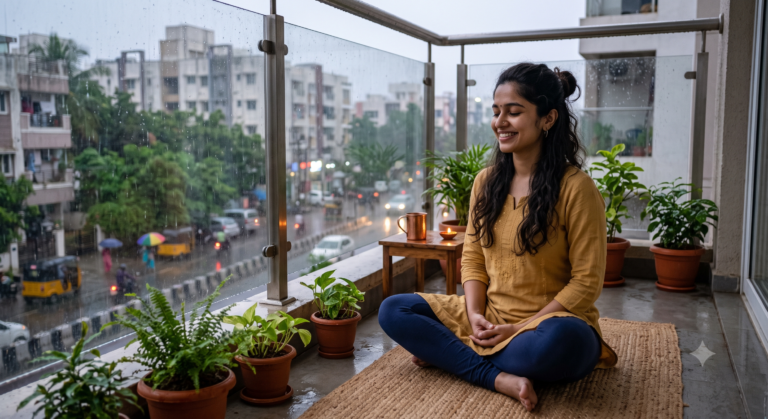
It has been raining for three days straight. You wake up and honestly cannot tell if it is morning or evening. The park is a mud pit, the gym feels miles away, and your yoga mat sits rolled up in the corner. Even the quiet sunrise you used to meditate to is hidden behind thick grey clouds. Slowly, the routine you were so proud of is slipping away. First, you skipped the morning walk. Then the meditation turned into a hurried five-minute stretch. Now, you are just eating breakfast at your laptop in the damp air, feeling disconnected from your practice. Everyone trying to maintain a routine in the monsoon goes through this. But what if the rain isn’t ruining your practice? What if it is just asking you to change it? Let us look at five simple indoor spiritual practices you can start today.
Key Takeaways
- Missing your morning walk or outdoor meditation does not mean you have lost your spiritual routine. It may simply need to look different during the rains.
- A diya, one round of japa, a few verses from a meaningful book, or ten quiet minutes can be enough to keep you connected on busy days.
- You do not need a peaceful garden, a temple visit, or a long morning routine to practise spirituality. A small corner of your home can become the place you return to every day.
- The best monsoon practice is not the most elaborate one. It is the one you can continue even when the weather changes and life becomes busy.
Why the Monsoon Is a Good Time to Turn Inward

Monsoon is not the enemy of your routine. In fact, ancient traditions saw the rainy season as the best window of the year for inner work. Chaturmas, the four-month cosmic rest period that begins in July, exists for this exact reason. Thousands of years of observation proved that the forced indoor time, the muffled sounds of the city, and the slowed-down external world create the perfect environment for looking inward. What feels like a frustrating disruption is actually the cosmos asking you to adapt. Here are five simple habits you can maintain even in a small apartment, taking under 30 minutes a day, that actually thrive in the rain.
1. The Morning Lamp Practice
What it is: Lighting a simple diya (oil lamp) every morning and sitting quietly with it for five to ten minutes.
Why it works now: When thick clouds hide the sun, the traditional advice to meditate at first light feels impossible. But lighting a diya creates your own dawn. The flame naturally draws your attention, meaning you do not have to force a complicated meditation technique. Because the skies are dark, the lamp easily becomes the bright, hypnotic centre of your morning.
How to do it: Find a quiet corner, ideally in the East or Northeast part of your home. Light your lamp at the same time every day before you touch your phone. Just sit and watch the flame for five minutes. You can add a brief prayer or intention later, but start with just sitting.
The cumulative effect: After 30 days of morning diya practice, you can notice a shift in your morning mood, mental clarity, and feel grounded. The lamp becomes an anchor that structures the entire day. If you maintain this during Shravan, the traditional benefits are said to multiply even further.
2. Indoor Japa (Mantra Repetition)
What it is: Chanting a specific mantra using a japa mala (a string of 108 beads) once a day from your home.
Why it works now: Japa is the ultimate indoor practice. You do not need a temple, special lighting, or much space. The cool, damp, less stimulating environment of the monsoon actually helps your mind settle into the repetition much faster than it would in the summer. Also, starting a japa routine during Chaturmas spiritually multiplies your efforts.
How to do it: Pick a mantra that feels right to you, like Om Namah Shivaya or the Gayatri mantra. Grab a rudraksha mala. Sit on a chair or your bed, and do one round of 108 recitations. It takes maybe ten minutes.
The cumulative effect: Daily japa produces measurable changes in mental steadiness within just three weeks. By day 40, you might notice the mantra playing quietly in the back of your mind during a stressful work meeting. By the time Chaturmas wraps up, the mantra becomes a natural refuge you can access anytime you feel overwhelmed.
3. Reading and Contemplation
What it is: Reading just one page of a wisdom text every day and sitting with the words for a few minutes.
Why it works now: Monsoon gives you the best excuse in the world to stay inside and read. While most people grab a novel, the tradition asks you to pick up wisdom literature. Also, with Saturn retrograde running from July 13 to late November, the cosmic energy heavily favours slow reading.
How to do it: Choose a text like the Bhagavad Gita, the Yoga Sutras, or even Rumi’s poetry. Read just one to three verses a day. Do not read to finish the book; read to absorb it. Close the book and sit quietly for three minutes.
The cumulative effect: Slow, contemplative reading rewires how you interpret ordinary life. You do not have to try hard to memorise the words. The mind simply absorbs the text over weeks and begins seeing daily situations through that calmer lens.
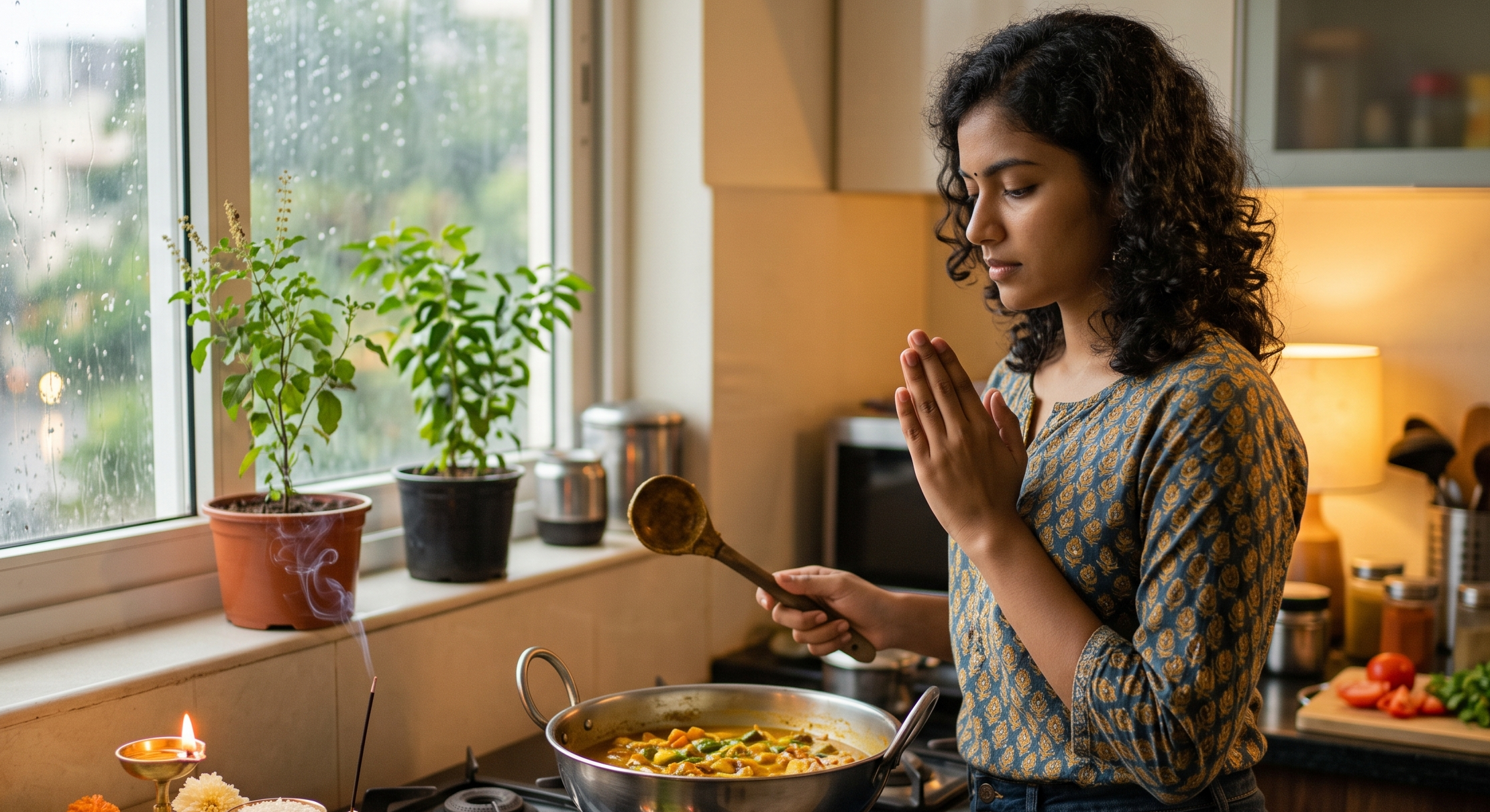
4. The Sacred Kitchen
What it is: Treating your daily cooking as a mindful, sacred ritual rather than a rushed chore.
Why it works now: Heavy rains usually mean less eating out and fewer food deliveries. You are going to be cooking at home more anyway, as hot, fresh food is essential for your health right now. In traditional practice, cooking with attention is a form of sacred offering.
How to do it: Wash your hands and take a deep breath before you start. Cook without looking at your phone or watching a show. Notice the smell of the spices and the sound of the pan. Cook a little slower than usual. Take a brief moment of gratitude before you take your first bite.
The cumulative effect: People who begin cooking with more care and attention often notice small changes over time. Meals feel more nourishing, family members connect more deeply around the table, and even simple food becomes more satisfying. You do not need to spend any extra time in the kitchen. The idea is simply to bring more presence to the time you already spend there.
5. Evening Silence (Mauna)
What it is: Spending ten to twenty minutes in complete, intentional silence every evening. No screens, no talking, no music.
Why it works now: Monsoon evenings are naturally quiet. The rain muffles the city traffic, and people stay indoors. The universe is already handing you a silent environment; you just have to receive it instead of filling it with digital noise.
How to do it: Pick a time, like 8 pm. Put your phone completely out of reach. Sit comfortably on the floor or a chair. Do not try to force a deep meditative state. Just sit and be quiet. Start with ten minutes and slowly build up.
The cumulative effect: A mind that has spent fifteen minutes in silence every evening for four months is fundamentally different from a mind that has not. Your sleep improves. Daily anxiety drops. Decision-making becomes sharper. You also become much less reactive in your relationships because you have practised giving yourself space to just exist.
Your Daily Monsoon Routine

You can easily fit these indoor spiritual practices into a busy, modern work schedule without feeling overwhelmed.
- Morning (30 minutes total): Wake up and avoid looking at your phone. Do your 5-minute lamp practice, followed directly by 10 to 15 minutes of japa on your mala.
- Mid-day: Practice mindful cooking when you prepare your lunch or dinner. Just turn off the distractions.
- Evening (25-40 minutes total): Read your chosen text for a few minutes, sit quietly to absorb it, and then move into your 15 to 20 minutes of complete silence.
Your Home Can Be a Place of Practice Too
Modern wellness often makes spirituality look like something that happens outdoors, during sunrise walks, yoga retreats, or visits to distant ashrams. As a result, simple practices done at home can sometimes feel less meaningful. The monsoon gently challenges that idea. For centuries, monks stayed in one place during these four months and devoted more time to their inner lives. These five habits follow the same spirit. Lighting a lamp, chanting a mantra, reading a few pages slowly, cooking with care, or simply sitting in silence can all become meaningful practices. They have helped people feel grounded for generations, and they do not require you to go anywhere.
Monsoon is not disrupting your routine. It is offering you the chance to build a real one. A spiritual routine that breaks the second it rains was never truly anchoring you in the first place. If you build this simple, indoor framework now, you will step out of the monsoon season in late November with a unshakable practice that will support you for the rest of your life.
Not sure whether you need a mantra, meditation, or a simple daily remedy?
Ask Agastyaa which spiritual practices suit your birth chart. Get 4 questions free on AstroSure.
Indoor Spiritual Practices FAQs
1. How can I maintain a spiritual routine during the monsoon?
Move the practices you usually do outdoors into a quiet part of your home. Lighting a diya, chanting a mantra, reading a few verses, or sitting in silence can help you maintain a routine even when rain changes your schedule.
2. What are the best indoor spiritual practices during the rainy season?
Simple practices such as daily japa, diya meditation, reading spiritual texts, mindful cooking, and a few minutes of silence are easy to follow indoors and do not require much space.
3. Why is the monsoon considered a good time for spiritual practice?
The rainy season naturally slows travel and outdoor activity. Traditions such as Chaturmas use this quieter period for prayer, reflection, self-discipline, and deeper inner work.
4. How much time should I spend on spiritual practice every day?
You do not need a long routine. Even 15 to 30 minutes practised regularly may feel more meaningful than an elaborate routine you struggle to maintain.
5. Can I do japa without a mala?
Yes. A mala can help you keep count and stay focused, but it is not essential. You can repeat a mantra quietly for a fixed amount of time instead.
Want personalised cosmic guidance?
Download AstroSure and chat with Agastyaa AI for insights tailored to your birth chart.
Download AstroSure