What Is Tarot? A Complete Guide to Cards, Spreads and Readings
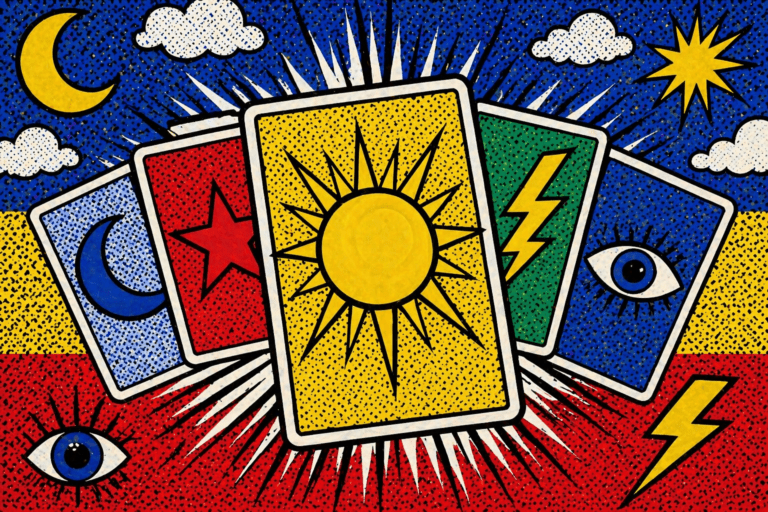
Have you ever looked at a beautiful tarot deck and wondered what secrets it holds? Many people assume tarot cards are just a spooky fortune-telling trick used to predict the future. However, the reality is actually much more empowering. The cards show you exactly what is happening inside your own mind. Tarot acts like a visual mirror for your subconscious. It gives you the vocabulary to understand what you already know deep down but might be afraid to admit. So if you are ready to shuffle the deck and uncover those inner truths, this complete guide will walk you through everything. Here is a breakdown of exactly what tarot is and how you can start using it to navigate your life today.
Tarot: At a Glance
- A standard tarot deck holds exactly 78 cards split into two groups: 22 Major Arcana cards representing massive life shifts and karmic lessons, and 56 Minor Arcana cards handling everyday situations across four suits (Wands, Swords, Cups, Pentacles)
- Tarot is not fortune-telling. Instead, it works by triggering your own intuition through vivid visual symbols, helping you understand hidden motivations, relationship patterns, and unspoken desires
- The best beginner spread is a simple three-card pull (Past, Present, Future or Situation, Action, Outcome) before moving to complex layouts like the eleven-card Celtic Cross
- Tarot follows a strict 78-card structure every time, while oracle cards are completely free-form with no fixed number or rules, making them a gentler but less detailed tool
What Is Tarot and How Does It Work?
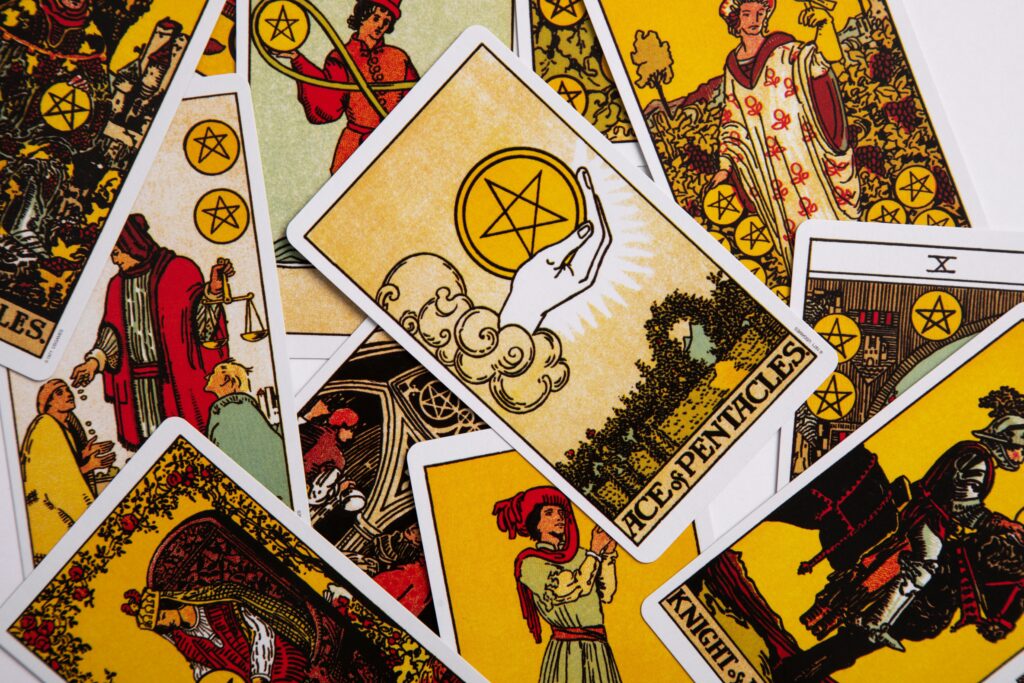
Let us demystify the process. A tarot card reading explained simply is just a deep, honest conversation with yourself. The origins of the cards trace back to 14th-century Europe, where they actually started out as a simple parlour game. Then, by the 17th century, people realised the symbols held massive psychological weight and began using them for deeper guidance.
The secret behind how tarot works has nothing to do with supernatural powers. Instead, it relies entirely on your own intuition and timeless human archetypes. When you lay the cards out on a table, the vivid images trigger your intuition. As a result, they force you to look closely at your hidden motivations, your relationship patterns, and your unspoken desires.
The Anatomy of the Deck: Major and Minor Arcana
A standard, traditional deck holds exactly 78 cards. They are split into two main families. Once you understand the major arcana and minor arcana split, the entire system clicks into place and becomes incredibly easy to navigate.
The Minor Arcana (56 Cards)
The 56 Minor Arcana cards deal with the everyday stuff. Specifically, they handle your daily ups and downs, temporary mood swings, and passing situations at work or home. This section looks a lot like a standard deck of playing cards, broken down into four distinct suits:
- Wands (Fire): This is your hustle and passion. Wands deal with your personal drive, creative spark, ambition, and the sheer energy you put into the world.
- Swords (Air): This is your mental space. Swords address communication, overthinking, conflict, sharp words, and sudden flashes of clarity.
- Cups (Water): This is all about your feelings. Cups focus heavily on romance, family ties, deep emotional connections, and your intuition.
- Pentacles (Earth): This is your physical world. Pentacles highlight your career path, your bank account, your home life, and your long-term security.
In addition, every suit contains cards numbered from Ace through Ten, plus four Court Cards representing specific people or personality types: the Page, Knight, Queen, and King.
The Major Arcana (22 Cards)
The 22 Major Arcana cards are the heavy hitters of the deck. They represent massive life shifts, deep karmic lessons, and huge milestones. Numbered from 0 to 21, these cards tell the story of The Fool’s Journey, a cosmic map of human growth, spiritual evolution, and eventual enlightenment.
Major Arcana Meanings: The Fool to Temperance
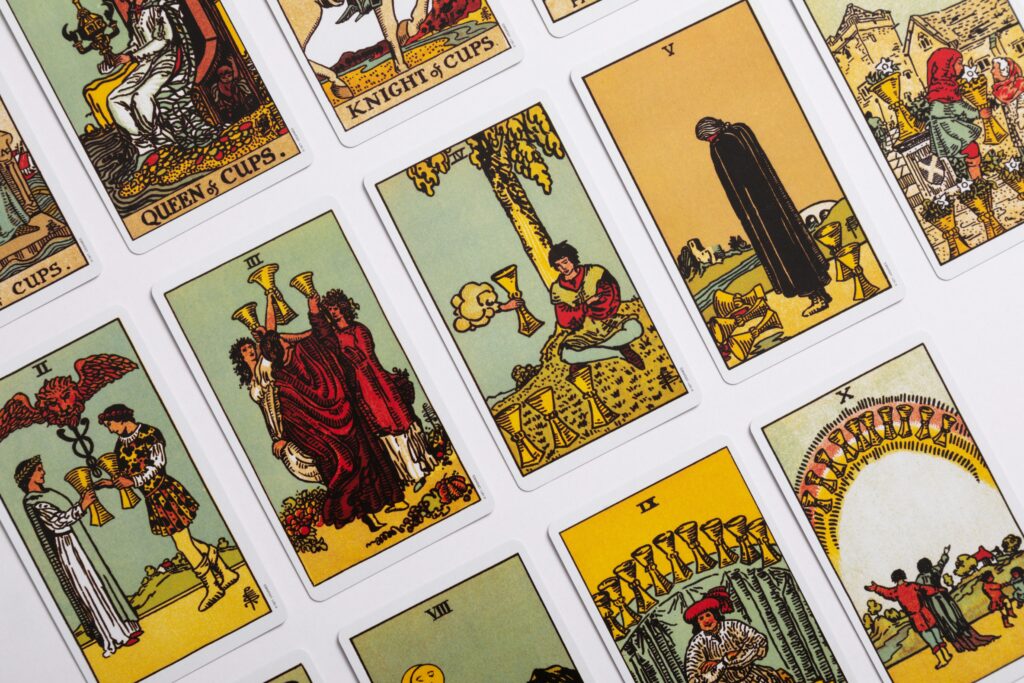
Learning the foundational tarot cards meaning starts right here. Each of these archetypes carries a massive, specific vibe. Here is your quick, modern cheat sheet:
- 0 The Fool: Taking a blind leap of faith and jumping enthusiastically into a brand-new adventure.
- I The Magician: Having absolutely all the tools you need to make things happen. In other words, pure manifestation and focus.
- II The High Priestess: Trusting your gut completely. She rules the subconscious mind and hidden mysteries.
- III The Empress: Big nurturing energy. She brings abundance, creativity, sensuality, and deep care.
- IV The Emperor: Stepping up as the boss. He represents structure, rules, authority, and setting firm boundaries.
- V The Hierophant: Sticking to tradition, organised belief systems, formal learning, and spiritual mentors.
- VI The Lovers: Deep connections, perfect harmony, and making choices that perfectly align with your core values.
- VII The Chariot: Pure willpower. Essentially, it means pushing through obstacles and driving straight toward victory.
- VIII Strength: Taming your inner demons and facing fears with soft compassion rather than brute force.
- IX The Hermit: Unplugging from the noisy world to find your own inner quiet and personal guidance.
- X The Wheel of Fortune: The universe stepping in. This card signals sudden luck, fate, karma, and massive turning points.
- XI Justice: Karma balancing the scales. It is about seeking truth, demanding fairness, and taking accountability.
- XII The Hanged Man: Taking a purposeful pause to look at a frustrating situation from a totally different angle.
- XIII Death: Clearing out the old to make way for the new. In essence, it represents massive transformation and necessary endings.
- XIV Temperance: Finding your ultimate sweet spot. Balance, patience, and blending opposing forces together.
Major Arcana Meanings: The Devil to The World
- XV The Devil: Toxic habits, feeling trapped, and holding onto self-sabotaging attachments. However, this card is also a call to break free.
- XVI The Tower: The sudden collapse of weak foundations. Although it feels harsh, it is an incredibly necessary wake-up call.
- XVII The Star: Deep healing, cosmic inspiration, and bright hope returning after a tough storm.
- XVIII The Moon: Things are definitely not as they seem. Specifically, it points to illusions, anxieties, and hidden truths coming to light.
- XIX The Sun: Absolute joy, warmth, roaring success, and clear skies ahead.
- XX Judgement: A massive spiritual wake-up call. It is about forgiving your past mistakes and answering a higher calling.
- XXI The World: You made it. Completion, wholeness, and successfully closing out a major life chapter.
Also read: What Is Numerology? Life Path Numbers, Meanings and Guide
Types of Tarot Spreads
A spread is simply the pattern you use to lay out the cards on the table. Where a card lands changes its meaning entirely. If you want the absolute best tarot spreads for beginners, stick to pulling just three cards. You can assign fun, highly practical meanings to their positions. For example, try pulling three cards for Past, Present, Future or Situation, Action, Outcome. It keeps the story tight and easy to read.
Once you get completely comfortable with the imagery, you can then explore more complex types of tarot spreads. The Celtic Cross is a famous, classic eleven-card layout. It dives incredibly deep into your subconscious blocks, outside influences, immediate challenges, and final outcomes.
Tarot vs. Oracle Cards
People often mix these two decks up. Tarot has strict rules. Every traditional tarot deck has exactly 78 cards and follows the major and minor structure perfectly. In contrast, oracle cards are completely free-form. An oracle deck might have 44 cards with single, gentle words like Breathe or Forgive printed on them. So while tarot gives you a highly structured framework to build a complex story, oracle cards just give you a loose, gentle nudge in the right direction.
How to Read Tarot Cards: A Step-by-Step Guide
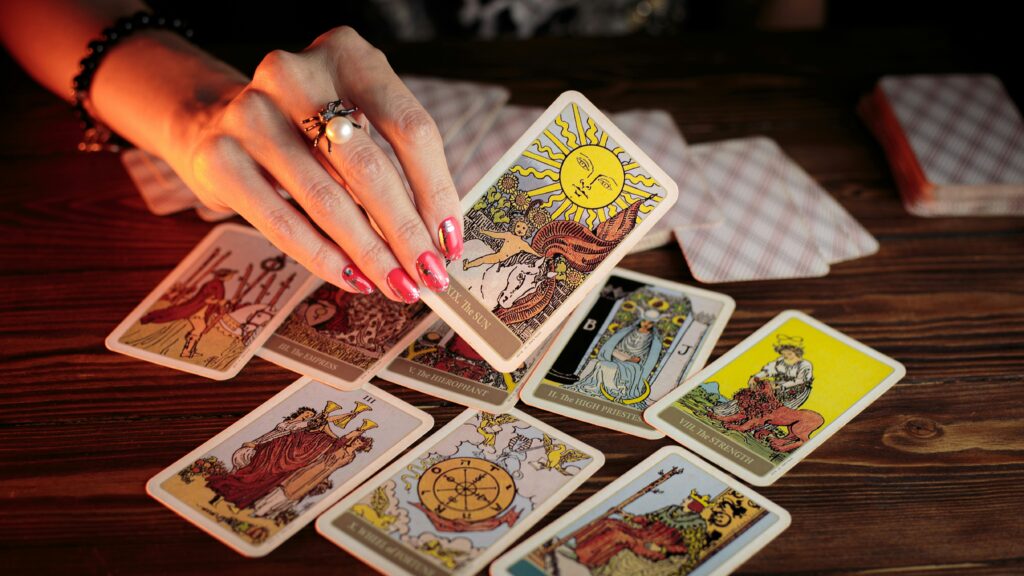
You absolutely can learn tarot step by step right in your own living room. Here is exactly how you get started.
- Find Your Deck: First, pick art that you actually like looking at. The classic Rider-Waite Smith deck remains the gold standard for a very good reason. The pictures are highly literal, making the stories incredibly easy to read and understand.
- Shuffle and Breathe: Next, find a quiet spot. Hold a specific question in your mind and shuffle the cards. Let your hands do the physical work while you focus entirely on the present moment.
- Trust Your Eyes: Then, pull your cards and lay them out. Before you grab a book to look up the meaning, just look at the picture. What is happening in the scene? Does the card feel heavy, scary, joyful, or light? Your initial gut reaction is the most accurate part of how to read tarot cards.
- Keep It Upright: Finally, sometimes cards fall upside down. Readers call these reversals. For beginners, just turn the card right-side up. Master the core, positive meanings first before you worry about blocked or reversed energy.
To make the process even easier, get your personalised tarot reading on AstroSure and find clarity today.
Tarot FAQs
1. What is the best way to practice daily?
Pulling just one card every single morning is a brilliant habit. Simply ask the deck, “What should I pay attention to today?” This practice helps you learn the daily tarot card meaning by actually living it out, rather than memorising a dry textbook.
2. Does a tarot yes or no pull actually work?
Tarot works best with open-ended questions. Instead of asking a blunt yes or no question, ask for advice. For instance, swap “Will I get the job?” with “What energy should I bring to this interview?” The cards love to show you the “how” and the “why” rather than giving a flat answer.
3. Can I do a tarot love reading on myself?
Yes, and it is highly revealing. A simple three-card pull focusing on “You, Them, and The Dynamic Between You” is a perfect way to start. As a result, it helps you spot your own relationship habits and patterns instantly.
4. Do I have to be psychic to do this?
Not at all. Tarot is a purely secular tool for self-reflection and personal growth. You just need an open mind, a bit of imagination, and the willingness to be honest with yourself.
Also read: Your Birth Chart Reveals Hidden Strengths You Never Knew You Had
Ask Agastyaa what your tarot cards are trying to tell you right now
Want personalised cosmic guidance?
Download AstroSure and chat with Agastyaa AI for insights tailored to your birth chart.
Download AstroSure