Baisakhi 2026: Date, Significance and Celebration Guide
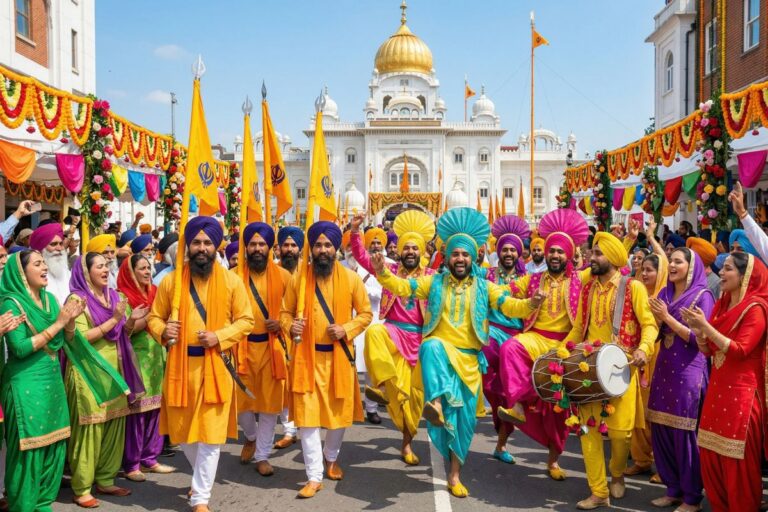
Baisakhi is one of the brightest and most energetic festivals celebrated in India. This special day marks the beginning of the Sikh New Year and the joyful start of the spring harvest season. While the entire country celebrates the solar new year in different ways, the states of Punjab and Haryana turn this day into a massive celebration of farming and faith. If you want to know the exact Baisakhi 2026 date and understand the powerful history behind it, you are in the right place. Let us explore exactly what makes this day so important.
Baisakhi 2026 Quick Glance
- Baisakhi 2026 falls on April 14 (Tuesday)
- It marks the Sikh New Year and the harvest festival of Punjab
- This day also begins the solar new year across India in different forms
- It celebrates the formation of the Khalsa Panth in 1699
When is Baisakhi 2026?
The date for Baisakhi is fixed by the movement of the sun. According to the Vedic calendar, the festival happens on the exact day the Sun God leaves the zodiac sign of Pisces and enters Aries. This specific solar movement is called Mesha Sankranti.
- Baisakhi 2026 Date: Tuesday, April 14, 2026.
- Vaishakhi Sankranti Moment: 09:39 am.
Also Read: April 2026 Festivals Full List
The True Significance of Baisakhi
Baisakhi is not just a single celebration. It carries three completely different layers of meaning that make it special for millions of people.
The Birth of the Khalsa Panth
The deepest meaning of Baisakhi comes from Sikh history. In 1699, the tenth Sikh Guru, Guru Gobind Singh Ji, changed the religion forever on this day. He gathered a massive crowd in Anandpur Sahib and established the Khalsa Panth, a community of pure and fearless believers. This event gave the Sikh community a strong, organised identity to stand against unfair rulers.
The Farmers’ Festival
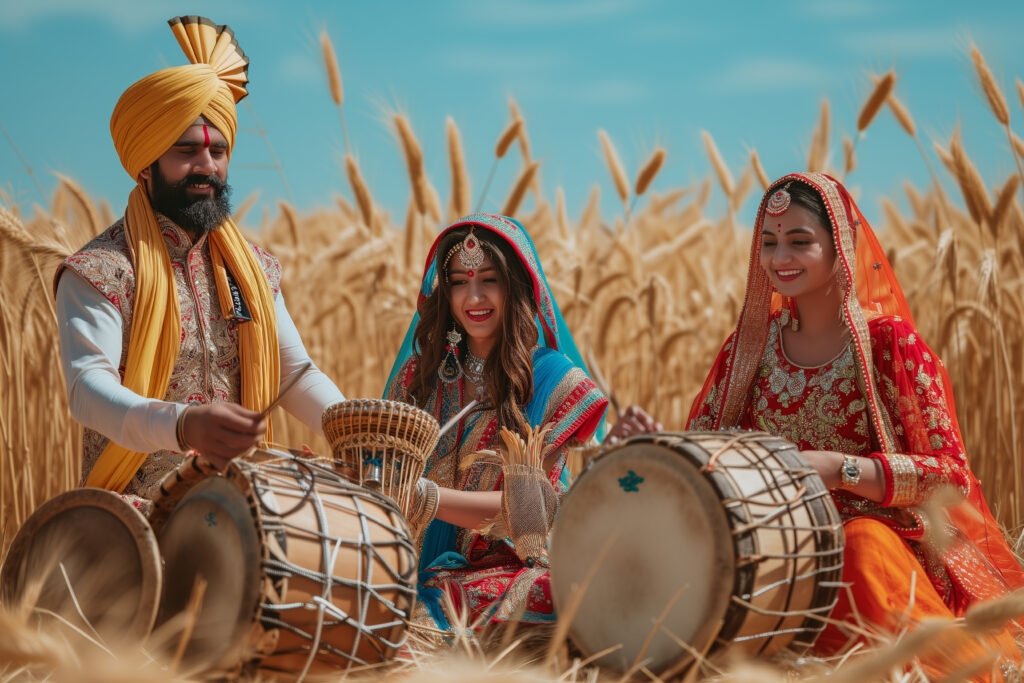
For the farmers in Punjab and Haryana, Baisakhi is a day of pure joy and relief. By the middle of April, the winter wheat crop, known as the Rabi crop, is finally ripe and ready to be cut. Before they start the hard physical work of harvesting, the farmers use this day to thank God and nature for providing a bountiful crop.
A Nationwide Solar New Year
In Hindu traditions, this day marks the official start of the solar new year. While Punjab celebrates Baisakhi, the rest of the country celebrates the Indian New Year under different names.
In Assam, it is called Rongali Bihu.
In Tamil Nadu, it is known as Puthandu.
In Kerala, families celebrate Vishu.
In West Bengal, it is called Pohela Boishakh.
The Story Behind the Five Beloved Ones
To truly understand Baisakhi, you must know the story of 1699. During that time, the Mughal ruler Aurangzeb was treating people very unfairly. The weak were suffering quietly without any justice. Guru Gobind Singh Ji wanted to fill the people with courage. He called a huge meeting and raised his sword, asking if anyone was brave enough to die for the truth. Five ordinary men stepped forward, ready to give their lives. Instead of harming them, the Guru baptised them. These brave men became known as the Panj Pyare, or the Five Beloved Ones.
The Rule of the Five K’s
Guru Gobind Singh gave these original five members a uniform of purity and courage. This uniform is made of the famous Five K’s that Sikhs still wear today:
- Kesh: Uncut hair
- Kangha: A small wooden comb
- Katchera: Special cotton underwear
- Kara: A steel bangle
- Kirpan: A small sword
This event also marked the end of the human Guru tradition. The Holy Book, the Guru Granth Sahib, was declared the eternal, living guide for all Sikhs.
Baisakhi Rituals: How the Day is Celebrated
The main celebrations of Baisakhi always centre around the Gurdwara and the open farming fields. The day is a beautiful mix of deep prayer and loud, happy dancing. Here is exactly what happens:
- Morning Prayers: The day starts very early. People take a bath, often in a holy river if possible, and wear bright new clothes. Everyone gathers at the Gurdwara for special morning prayers. The holy book, the Guru Granth Sahib, is treated with great respect. It is given a symbolic bath with water and milk before being placed carefully on its special throne. The priests then read verses out loud while the followers listen quietly. Throughout the morning, musicians sing beautiful, holy songs called kirtans.
- The Amrit Ceremony: Because Baisakhi marks the birth of the Khalsa, it is the most popular day for people to be initiated into the faith. A special holy water called Amrit (nectar) is prepared in an iron bowl. Following the ancient tradition, the devotees who wish to take Amrit drink five sips of it in a row.
- Karah Prasad and Langar: Around noon, after the main prayers (Ardas) are finished, a sweet dish made of semolina called Karah Prasad is offered to the Guru for blessings. It is then handed out to everyone in the crowd. Afterwards, everyone sits together on the floor for the Langar. This is a massive community meal where people of all religions, classes, and backgrounds sit side-by-side and eat the same vegetarian food together.
- The Joy of Bhangra: After the peaceful prayers are finished, the real party begins. People head to the open fields or village squares. To the loud, happy beats of the dhol drum, men perform Bhangra dance, while women perform the graceful Giddha dance. The rest of the day is spent visiting family, exchanging gifts, and enjoying a huge feast to welcome the new year.
How to Celebrate Baisakhi at Home
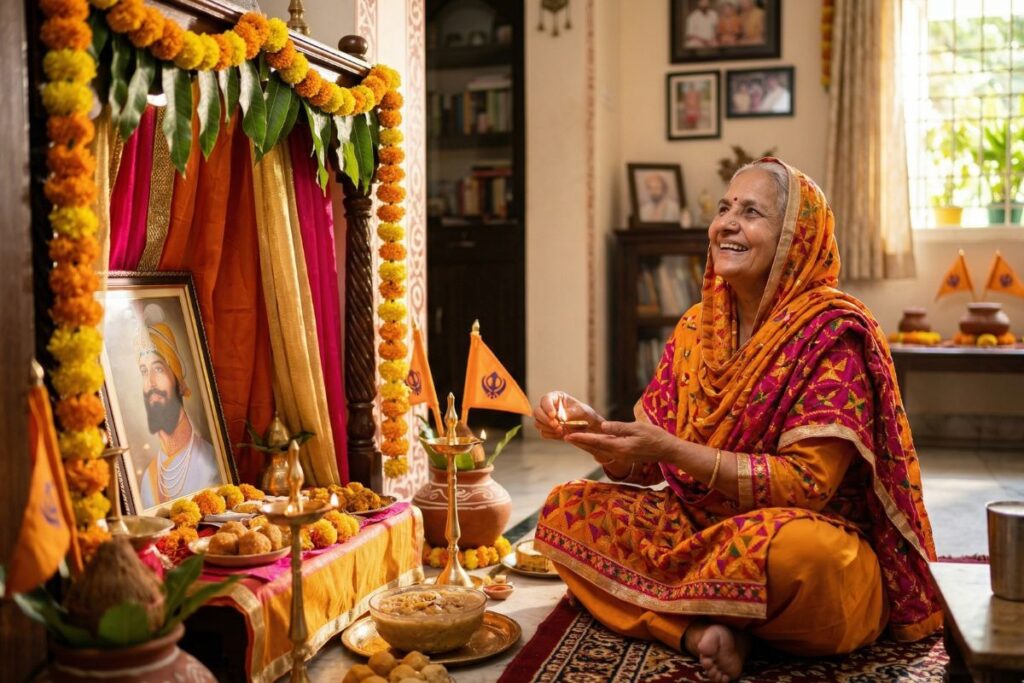
If you cannot visit a Gurdwara this year, you can still observe this joyful April 2026 festival in your own house. Just follow these simple steps to bring the festive spirit inside.
1. Wake up early and take a bath to start the new year fresh.
2. Wear bright and colourful new clothes.
3. Play holy Kirtan music in your living room to create a peaceful environment.
4. Cook a sweet dish like wheat halwa to offer as Prasad to God.
5. Prepare a large vegetarian meal and share it with your family and neighbours to keep the spirit of Langar alive.
Baisakhi is a powerful reminder of courage, community, and gratitude. Whether you are thanking the earth for a good harvest or remembering the brave history of the Khalsa Panth, April 14 is a day to enjoy with your loved ones. Plan your day, prepare your sweet food, and welcome the new solar year with a happy heart.
Also Read: Vinayaka Chaturthi 2026 Dates
Baisakhi 2026 FAQs
1. When is Baisakhi in 2026?
Baisakhi will be celebrated on April 14, 2026. It marks the Sun’s entry into Aries, known as Mesha Sankranti.
2. Why is Baisakhi important in Sikhism?
Baisakhi marks the formation of the Khalsa Panth in 1699 by Guru Gobind Singh Ji. It represents courage, equality and spiritual discipline.
3. Is Baisakhi only a Sikh festival?
No. While it is deeply important in Sikhism, it is also celebrated as a harvest festival and solar new year across different regions of India.
4. How is Baisakhi celebrated in India?
People visit Gurdwaras, take part in prayers, eat Langar, and celebrate with Bhangra and Giddha dances. Families also gather for meals and festivities.
5. What is the significance of the Five K’s?
The Five K’s represent discipline, identity and faith in Sikhism. They were introduced by Guru Gobind Singh Ji during the formation of the Khalsa.
Ask Agastyaa what this solar new year means for your life and personal growth
Want personalised cosmic guidance?
Download AstroSure and chat with Agastyaa AI for insights tailored to your birth chart.
Download AstroSure