Why Do People Knock on Wood After Saying Something Good? Can It Really Prevent Nazar?

‘My baby finally sleeps through the night, touch wood.’ You have probably heard or said something exactly like this. Someone shares a piece of good news, and within seconds, they urgently tap the nearest table. Nothing bad has happened. No one has cursed them. Yet, the moment they speak their happiness out loud, a tiny wave of panic sets in. This reaction reveals a fascinating human reflex. We worry that naming our joy makes it visible to the world, leaving it vulnerable to being challenged or taken away. In India, this feeling naturally overlaps with the fear of the evil eye. But can the habit to knock on wood prevent nazar, or does it come from somewhere else entirely? The habit actually links to European folk traditions rather than Indian religious practice. It acts as a borrowed habit that perfectly fits an ancient anxiety. Let us look at why we do it.
Key Takeaways
- Knocking on wood does not serve as a Vedic ritual. Instead, the habit links with old European beliefs about trees, protection, and spirits.
- In India, ‘touch wood’ gradually connected with “nazar na lage” because people use both after sharing something good that suddenly feels vulnerable.
- Science provides no evidence that touching wood prevents the evil eye or changes what happens next. However, the small action helps people feel less anxious after speaking confidently about their happiness.
- You do not need to hide every good thing in your life out of fear. Gratitude and a little humility matter much more than finding the nearest wooden table.
Where Did the Knock-on-Wood Habit Begin?
Before we talk about the evil eye, we need to clear up a common misconception. Knocking on wood does not originate from a Vedic practice. It does not come from ancient Vedic astrology or Hindu scriptures. Instead, the origin ties directly to old European folk traditions. One popular theory points to ancient beliefs that protective spirits or divine forces lived inside trees. Therefore, touching a tree offered a way to ask these spirits for protection. Another idea suggests that knocking on wood created noise to distract evil spirits. People believed this noise prevented spirits from overhearing their good news. While ‘touch wood’ sounds like one simple superstition, its history remains far more tangled than the ritual itself.
Why Wood Became a Symbol of Protection
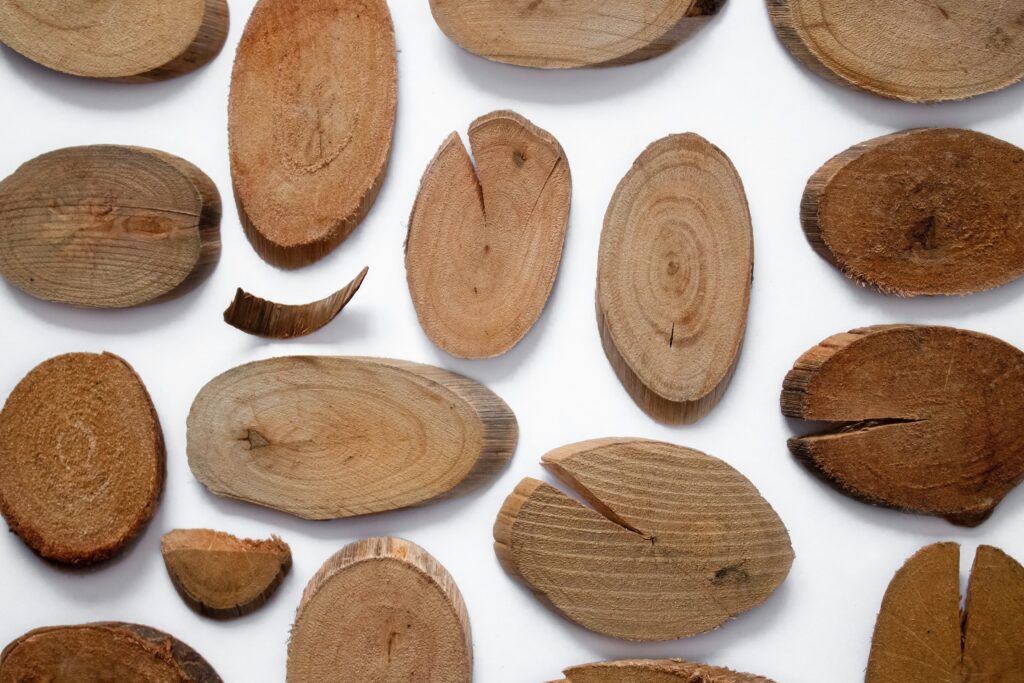
For ancient cultures, wood did not just mean a piece of furniture sitting in a living room. It belonged to a living tree. Across many cultures, trees represented life, fertility, endurance, and protection. Because a tree roots deep in the earth and reaches its branches into the sky, ancient people viewed it as a bridge between the physical world and the spiritual realm. Consequently, touching wood served as a way to ground your good fortune. You returned your claim to something older and stronger than yourself. We also find a kind of comfort in the action itself. Speaking about your success feels like sending energy out into the open air. Touching wood brings your hand back to something solid. Therefore, that action feels stabilising, even if you do not fully believe in the superstition.
Why Trees Hold Meaning in Hindu Tradition
While ‘knock on wood’ does not belong to Vedic rituals, trees hold massive spiritual importance in Hindu traditions. Different trees carry specific sacred qualities:
- The Peepal tree represents spiritual wisdom and divine presence.
- The Banyan tree stands for longevity and stability.
- The Tulsi plant brings purity, devotion, and protection.
- The Neem tree traditionally connects with purification.
People often pray near these trees, tie sacred threads around them, or offer water. However, you should not confuse these beautiful practices with the origin of the knock-on-wood habit. The connection sits much broader. Different cultures developed different rituals, but they shared the same core belief. Trees act as more than just ordinary objects.
How ‘Touch Wood’ Connected With Nazar in India
The English phrase ‘touch wood’ likely became common in India through British influence and continued as part of everyday speech. Over time, Indians simply started using it alongside older, traditional expressions. Today, someone might say, ‘My daughter is doing so well in school, touch wood, nazar na lage.’ Two completely different traditions exist in the exact same sentence. The English phrase and the Indian belief have different origins, but they serve the same purpose. They protect something good right after drawing attention to it. India did not adopt the history behind the phrase; it just adopted the feeling behind it.
Why Do We Touch Wood After Sharing Good News?
You never knock on wood before sharing good news. You do it right after. Traditional belief treats confident statements or loud praise as moments of exposure. Once you speak happiness aloud, it might attract unwanted attention. The knock acts like a quick correction. It serves as a way of saying you feel grateful and do not take the blessing for granted. It also softens what could sound like bragging. For example, saying your business has never had a bad year sounds absolute and slightly arrogant. Adding ‘touch wood’ at the end makes it sound humble. It acknowledges that circumstances can change in an instant.
Can You Give Yourself Nazar?
People usually associate nazar with someone else’s jealous gaze. But some folk traditions believe that even excessive self-praise can attract unwanted attention or disturb your good fortune. This does not mean you literally cast the evil eye on yourself. The deeper concern suggests that repeatedly announcing your success invites overconfidence or complacency. From a spiritual perspective, parents often say ‘nazar na lage’ after praising their own child because love itself acts as an intense, emotionally charged energy. Sometimes, people treat even pure admiration carefully when it becomes excessive.
Can Knock on Wood Prevent Nazar?

We have no scientific evidence that a knock on wood prevent nazar, changes your future, or creates a magical protective force field. From a Vedic perspective, no classical rule states that tapping a wooden table protects you from the evil eye. However, the ritual still has a very real effect on you.
- It instantly reduces the anxiety that follows a confident statement.
- It creates a temporary feeling of protection.
- It provides a familiar physical response to uncertainty.
- It offers emotional closure after sharing something precious.
Ultimately, the action changes how you feel in the present moment.
The Fake Wood Dilemma
People ask this question all the time. You say something good, look around, and all you see is a plastic chair and a laminated table. What do you do?
Traditional superstition would favour real wood because the symbolism comes from living trees. However, modern practice remains much less strict. People touch laminated desks, wooden-looking doors, or even their own heads as a joke. No strict spiritual rule decides whether a wooden phone case counts. That tells us something important. The modern ritual depends much more on the intention and the psychological reassurance than the actual material you touch.
Sharing Your Happiness Does Not Invite Bad Luck
Gratitude does not serve as an invitation to misfortune. Sharing your happiness does not automatically attract the evil eye. The healthiest spiritual lesson tells us not to hide every good thing that happens. Instead, we should remain deeply grateful without becoming obsessed with protecting our blessings.
Knocking on wood may not have begun as an Indian remedy for nazar, but it found a natural home in a culture that already understands the need to protect good fortune. There is no hard evidence that wood stops the evil eye. Yet, the small ritual continues because it gives us something immediate to do when our happiness suddenly feels fragile.
Something good is finally taking shape, but you are scared to trust it?
Ask Agastyaa what your current planetary phase says about the blessings entering your life. Get 4 questions free on AstroSure.
Touch Wood and Nazar FAQs
1. Why do some people say “touch wood” while others say “knock on wood”?
The phrases usually refer to the exact same superstition. “Touch wood” acts as the more common phrase in British English and many countries influenced by it, while “knock on wood” stays widely used in American English. The action may involve touching or lightly tapping a wooden surface.
2. Is “touch wood” connected with any Hindu scripture?
No known Hindu scripture presents touching or knocking on wood as a remedy for nazar. The phrase comes from a completely different cultural tradition, even though people now commonly use it alongside expressions such as “nazar na lage” in India.
3. Do you have to say “touch wood” out loud?
No. Modern practice has no fixed spiritual rule. Some people say the phrase out loud, some touch a wooden surface without speaking, and others use the phrase casually without performing the physical action at all.
4. Why do people touch their head when there is no wood nearby?
This usually serves as a joke or a playful substitute based on calling someone’s head “wooden.” It does not belong to the older superstition and has no established spiritual meaning.
5. Is it bad luck if you forget to touch wood after sharing good news?
No. Forgetting to touch wood does not mean something bad will automatically happen. The ritual acts as a cultural habit and a form of psychological reassurance, not a requirement for keeping your good fortune safe.
Want personalised cosmic guidance?
Download AstroSure and chat with Agastyaa AI for insights tailored to your birth chart.
Download AstroSure