Rama Navami 2026: Date, Puja Time, Significance and Astrology of Chaitra Navami
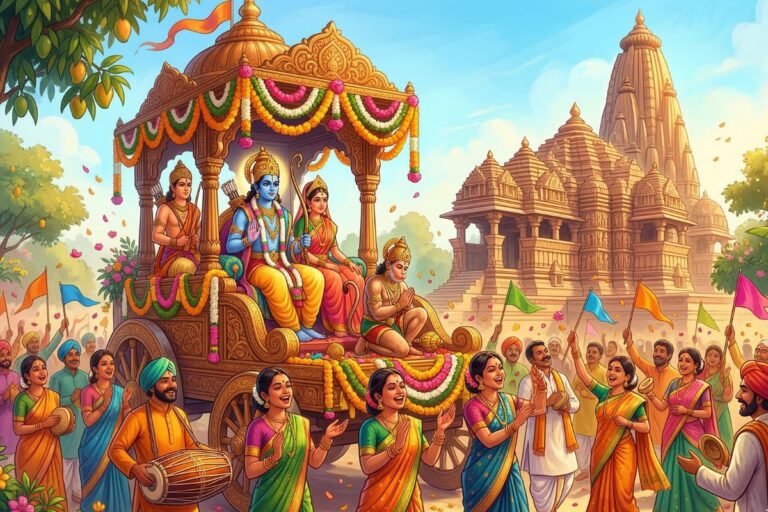
Every year, on the ninth day of the Chaitra month, many households across India wake up to the sounds of bhajans and the reading of the Ramcharitmanas. This day marks the birth of Lord Rama, the seventh avatar of Lord Vishnu. Falling on the final day of Chaitra Navratri 2026, it is a festival that celebrates the victory of dharma over injustice. Observing a fast and performing the puja with a pure heart on this day is believed to bring you peace, strength, and spiritual clarity. Here are the exact timings for Ram Navami 2026 and how to perform the rituals at home.
Ram Navami 2026 Date and Why There Is Confusion About It
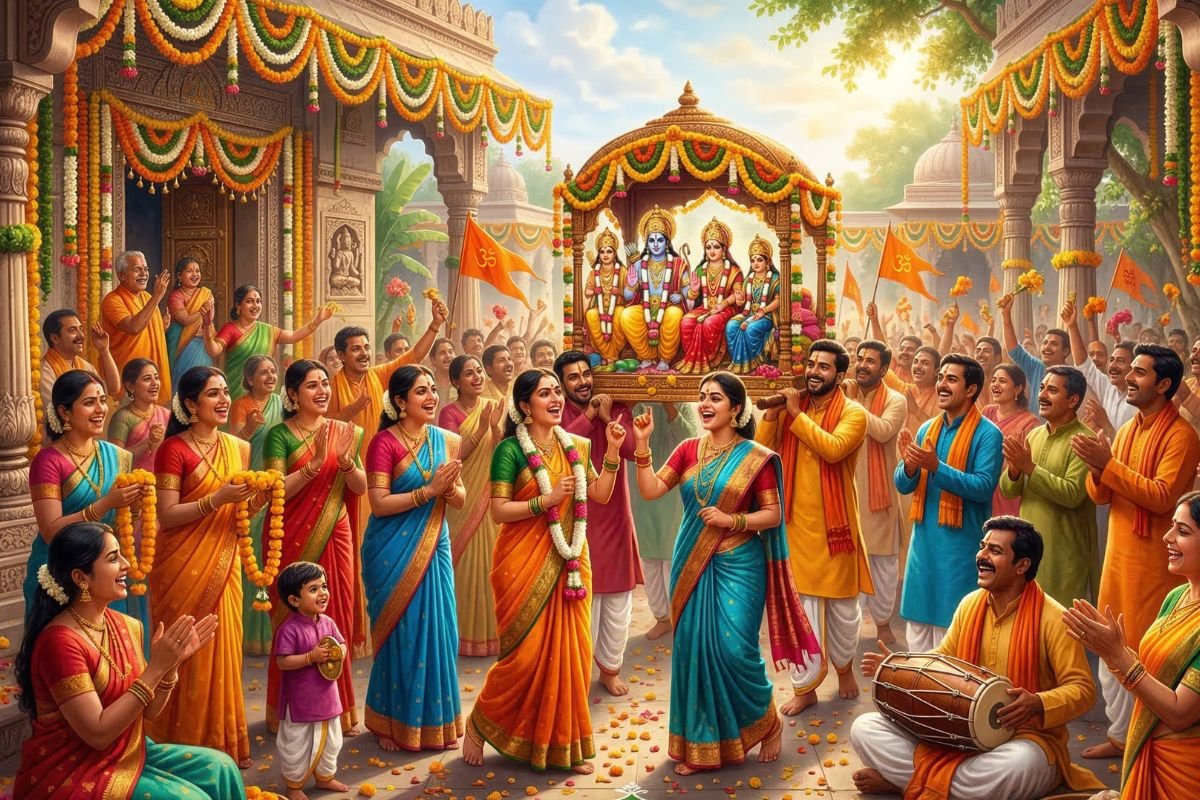
There is a slight overlap in dates this year. If you are checking the calendar to see when is Ram Navmi, you will notice both March 26 and March 27 mentioned. Here is the breakdown of the timings:
Navami Tithi begins: 11:48 am on Thursday, March 26.
Navami Tithi ends: 10:06 am on Friday, March 27.
According to the Vedic calendar, the festival must be celebrated on the day when the Navami Tithi is active during the afternoon (Madhyahna Kaal). On March 26, the tithi is present all afternoon. On March 27, the tithi ends in the morning. Therefore, Thursday, March 26, is the primary and most auspicious day to celebrate. Some families who strictly follow the Udaya Tithi (the tithi present at sunrise) can observe it on March 27. But according to tradition, it is advised that you celebrate the festival on March 26.
Also read: Masik Shivaratri 2026: Dates, Puja Vidhi and why this Shiva fast is powerful
The Puja Muhurat and Auspicious Timings
Since Lord Rama was born exactly at midday, the afternoon puja window (Madhyahna Muhurat) is the most critical time of the day. Depending on the exact Panchang you follow, the main afternoon worship time is either:
- 11:02 am to 1:28 pm (with the exact birth moment at 12:15 pm)
- 11:13 am to 1:41 pm (with the exact birth moment at 12:27 pm)
You can follow either window. Make sure you light your diya and perform the main aarti right at the exact midday moment. If you want to chant mantras or read the Ramcharitmanas at other times on March 26, you can use these auspicious Choghadiya timings:
- Shubha (Good): 6:09 am to 7:41 am
- Labha (Gain): 12:15 pm to 1:46 pm
- Amrita (Best): 1:46 pm to 3:17 pm
- Shubha (Vaar Vela): 4:49 pm to 6:20 pm
- Amrita (Night): 6:20 pm to 7:49 pm
What is Ram Navami and Its Significance
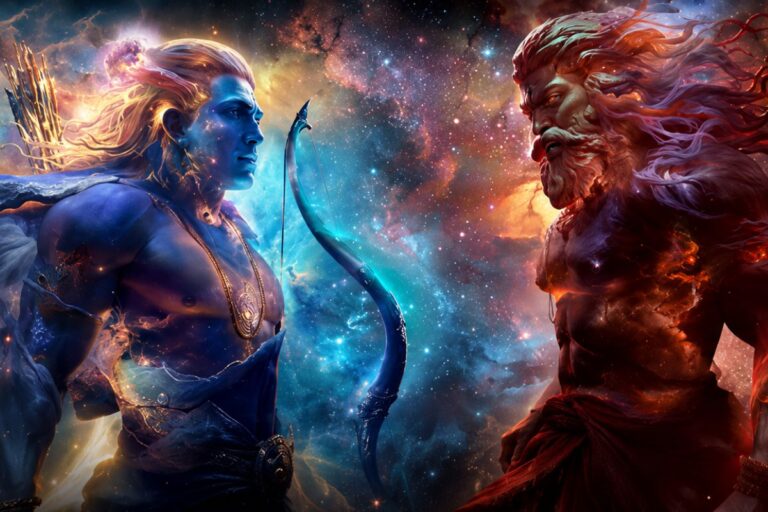
If a younger generation asks what Ram Navami is, the simplest answer is that it is the day the divine took human form to save the world from tyranny. When injustice grew too heavy for the earth to bear, the gods asked Lord Vishnu for help. He was born as Lord Rama to restore dharma. We call him Maryada Purushottam, meaning the ideal man. He lived by righteousness in every role: as a son who obeyed his father, a loving brother, a loyal husband, and a just king. The scriptures describe his nature beautifully, ‘Ramo vigrahavan dharmah sadhu satyaparakramah / Raja sarvasya lokasya devanam iva vasavah.’ This means Lord Rama is the living form of dharma. His courage is rooted in truth. Just as Indra rules the heavens, Rama is believed to be the ideal ruler of people on earth.
The Story of the Putrakameshti Yajna
The story of his birth begins with King Dasharatha of Ayodhya. He had no children and was desperate for an heir, so he performed the Putrakameshti Yajna under the guidance of Maharishi Vashistha. From the sacred fire, a divine bowl of kheer appeared. The king distributed this kheer among his three queens: Kaushalya, Kaikeyi, and Sumitra. Because of the blessed offering, the queens gave birth to four sons: Shri Ram, Lakshman, Bharat, and Shatrughna. The Valmiki Ramayana records the exact timing of this event, saying, ‘Tato yajña samāpte tu ṛtūnāṁ ṣaṭsuvatyaye / Tataḥ ṣaṇmāsyatīte tu chaitre nāvamike tithau.’ This verse means that after the yajna was completed and six seasons had passed, on the ninth day of the Chaitra month, Kaushalya gave birth to Lord Rama.
How to Perform Rama Navami Puja at Home
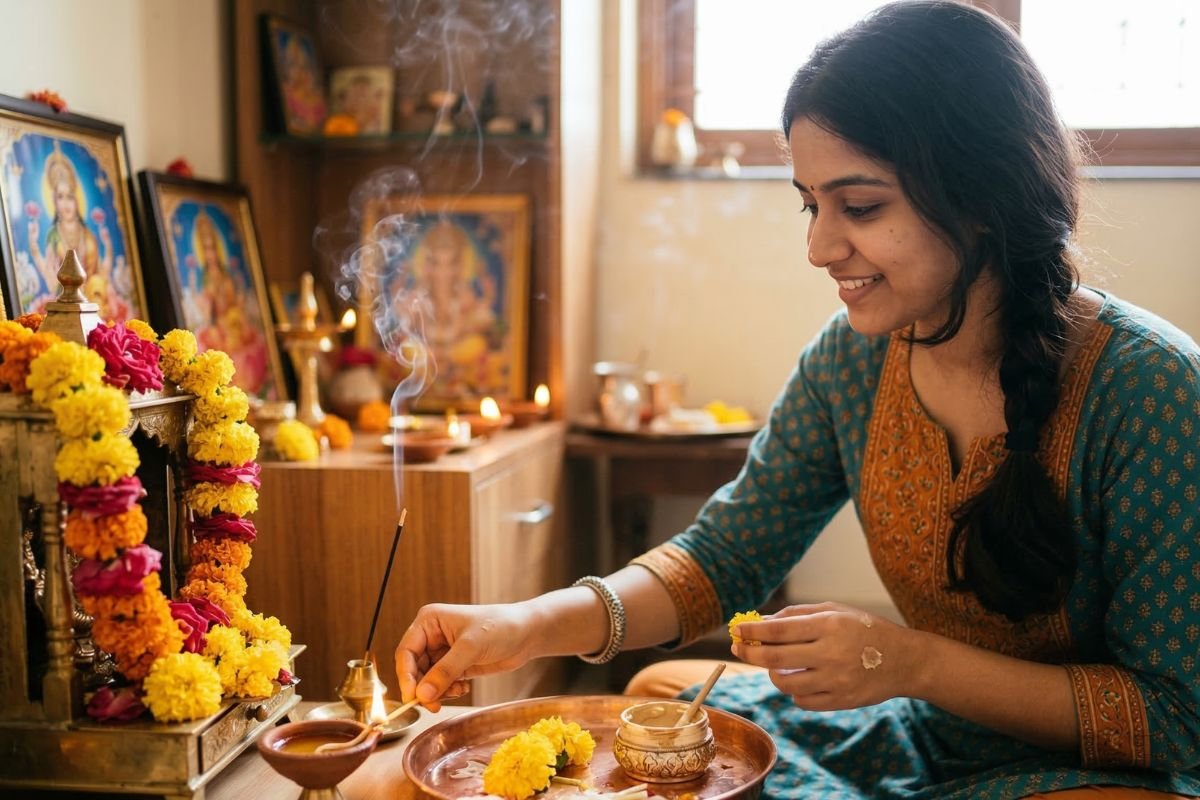
Setting up the puja at home is simple. Follow these steps for your morning and midday worship:
- Wake up before sunrise during Brahma Muhurta. Take a bath and wear fresh clothes. Wearing yellow is highly auspicious for this festival.
- Offer water, rice grains, and kumkum (vermilion) to the Sun God using a copper lota.
- Clean your puja room. Place a wooden chowki (platform) and spread a clean yellow cloth over it. Place your idols or pictures of Lord Rama, Mata Sita, Lakshman, and Lord Hanuman on the cloth.
- Bathe the idol using Gangajal or Panchamrit (a mixture of milk, curd, honey, ghee, and sugar).
- Offer yellow flowers, sandalwood paste (chandan), light an incense stick, and light a ghee diya.
- Offer the prasad. You can prepare kheer, saffron rice, panjiri, and sweets. Always place a Tulsi leaf in the offering.
- Sit and chant “Om Ramaya Namah”. You can also recite the Ram Raksha Stotra or chapters from the Ramayana.
- Listen to the Ram Aarti on AstroSure.ai and chant along with it. This is a very important part of the midday worship.
- Perform the main aarti with your lit diya exactly at noon (either 12:15 pm or 12:27 pm) during the Madhyahna Muhurat.
- If you have an idol of Ram Lalla (baby Ram), place it in a small cradle and rock it gently.
- Distribute the prasad to your family. If you are keeping a vrat (fast), break it only after completing this midday puja.
- Tie a Dharma flag at the main entrance of your house.
Also read: Matsya Jayanti 2026: Date, Puja Vidhi, and 5 Things to Do for Good Fortune
The Astrology of Chaitra Navami
The planetary alignments during Lord Rama’s birth carry deep meaning. He was born under the Punarvasu Nakshatra. In Vedic astrology, this nakshatra represents renewal and the return of light, a fitting star for an avatar born to remove the darkness of adharma. The Navami Tithi itself is ruled by the number nine, which stands for completion and divine purpose. Finally, his birth took place at midday. With the sun at its absolute peak, the moment was filled with intense solar energy, symbolising authority, truth, and leadership. This year, the midday period on March 26 falls perfectly across the Labha and Amrita Choghadiya slots, making the timing exceptionally powerful for worship.
Goswami Tulsidas wrote in the Ramcharitmanas, ‘Ramahi keval prem piyara, jani lehu jo jan nihara.’ This reminds us that Lord Rama only desires true devotion. Anyone who remembers him with pure love and devotion will be blessed with his grace. As you conclude your prayers, you can recite this verse of surrender: Lokabhiramam ranarangadhiram rajivanetram raghuvanshanatham / Karunyarupam karunakaram tam shri ramchandram sharanam prapadye. This means: I surrender to Lord Ramchandra, who brings joy to all, who is brave in battle, whose eyes are like lotus petals, and who is the lord of the Raghu dynasty.
Have a question about how this Ram Navmi affects you? Ask Agastyaa to give you personalised insights
Want personalised cosmic guidance?
Download AstroSure and chat with Agastyaa AI for insights tailored to your birth chart.
Download AstroSure