Bohag Bihu 2026: Date, Significance and Celebrations
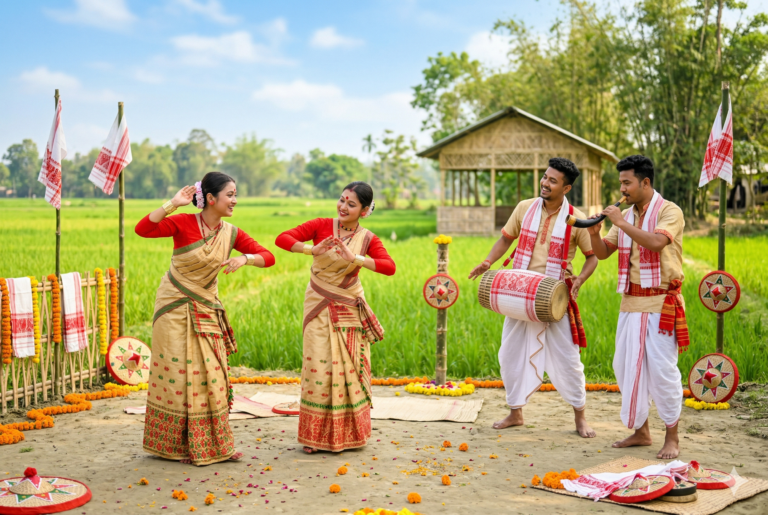
It is almost impossible to ignore Spring in Assam. The weather gets warmer, the orchids begin to bloom, and the beat of the traditional dhol signals that it is time to celebrate. Bohag Bihu, also widely known as Rongali Bihu, is the most anticipated festival in northeastern India. It marks the official start of the Assamese New Year and welcomes the fresh energy of the spring season. Unlike many other festivals that focus on fasting, Bohag Bihu is very vibrant. It is a time for singing, dancing, visiting loved ones, and eating delicious local food. Let us look closely at the exact dates for Bohag Bihu 2026, the history behind the community dances, and the beautiful rituals that make this week-long festival so special.
Quick Glance
- Bohag Bihu 2026 begins on April 14, with the Assamese New Year falling on April 15
- It marks the start of the Assamese calendar and the spring harvest season
- The festival spans seven days, each with its own rituals and meaning
- Celebrations focus on dance, music, food and strong community bonding
Bohag Bihu 2026 Date and Auspicious Timings
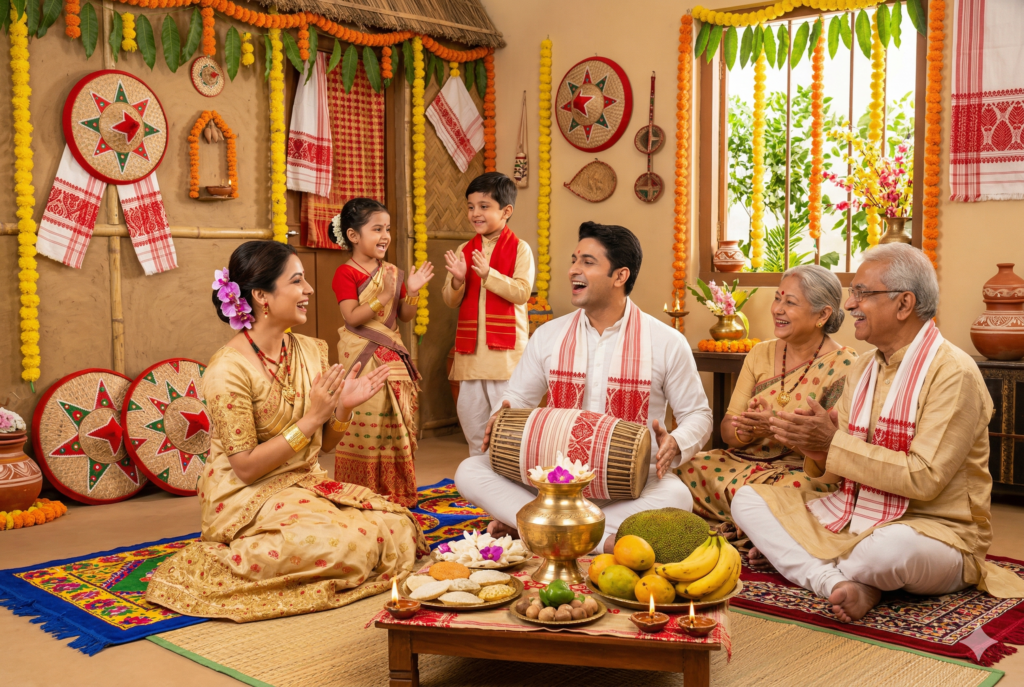
Bohag Bihu follows the solar calendar, meaning it aligns with the sun’s movement into the Aries zodiac sign. In 2026, the first main day of the Assamese New Year falls on Wednesday, April 15. The entire festival lasts for seven days, running roughly from April 14 to April 20.
If you are planning to perform morning prayers, host a community gathering, or start a new personal project on the first day of the new year, here are the most auspicious timings (Choghadiya) for Wednesday, April 15:
- Labha (Gain – Good for new activities): 05:56 AM to 07:32 AM
- Amrita (Best for prayers): 07:32 AM to 09:09 AM
- Shubha (Good time for visits): 10:45 AM to 12:21 PM
- Labha (Afternoon Gain): 03:34 PM to 05:10 PM
- Shubha (Evening Good Time): 07:22 PM to 08:47 PM
Also Read: April 2026 Festival Calendar
The History Behind Rongali Bihu
Why do the people of Assam celebrate this festival? The origins are deeply tied to the land and farming. Long before modern calendars existed, ancient indigenous tribes in Assam held special rituals to thank Mother Earth for the harvest and pray for fertile soil in the upcoming season. Over time, the powerful Ahom kings, who ruled Assam for nearly 600 years, gave this festival their support. The kings understood that bringing farmers together to sing, dance, and feast created a happy and united kingdom. Today, the festival has grown beyond just farming. While it still honours nature, Bohag Bihu has evolved into a proud symbol of Assamese unity and cultural pride.
Bihu Traditions: How the Seven Days Unfold

Bohag Bihu is a full week of celebrations, with each day holding a specific meaning and focusing on a different part of daily life.
- Goru Bihu (Honouring the Cattle): Before people celebrate themselves, they honour their farm animals. The first major day is dedicated entirely to the cattle, the backbone of an agricultural economy. Farmers take their cows and bulls to the local river, wash them with a paste of turmeric and black gram, and gently brush them. The animals are given special treats and decorated with fresh garlands.
- Manuh Bihu (Honouring the People): The second day is for the humans. Families wake up early, take a traditional bath, and put on brand new clothes. The younger generation visits their relatives to touch the feet of the elders and seek their blessings for a successful new year.
- The Gift of Bihuwan: During Manuh Bihu, people give each other a Gamosa, a traditional, handwoven white towel featuring bright red borders and intricate designs. Gifting a Gamosa is the ultimate gesture of love, respect, and cultural pride in Assam.
- Husori and the Iconic Bihu Dance: As the evening approaches, groups of young men and women travel from house to house in their neighbourhoods. They perform the Husori, singing traditional Bihu geet (folk songs) and dancing to the beat of the dhol and the pepa (a horn made from buffalo bone). The Bihu dance is incredibly fast, energetic, and joyful. It perfectly represents the youthful energy of spring. Families happily watch the performances in their courtyards and offer the dancers food and small donations in return for their blessings.
- Traditional Games and Feasting: Throughout the week, communities host traditional outdoor games that bring everyone together in a spirit of friendly competition. After the games, it is time to eat. Kitchens across the state are busy preparing special Assamese snacks. Families serve Jolpan (a traditional breakfast of rice flakes and jaggery) and spend hours making Pitha (sweet rice cakes) and Laroo (coconut balls) to share with their neighbours.
How to Celebrate at Home
You do not need to be in an Assamese village to celebrate the spirit of Rongali Bihu. You can easily bring the festival’s warmth into your own home with a few simple steps:
- Start fresh: Wake up early, clean your living space, and take a refreshing bath. Put on a new set of clothes to symbolise a clean slate for the year.
- Seek blessings: Call your parents, grandparents, and older relatives to wish them a Happy Bihu and ask for their guidance.
- Prepare a sweet treat: Simply prepare a bowl of Jolpan (flattened rice with thick curd and jaggery) or make some coconut laddoos to share with your family.
- Play traditional music: Put on some classic Bihu geet in the background to instantly fill your home with the energetic vibe of the festival.
Other Solar New Year Festivals Across India
While Assam celebrates Bohag Bihu, the rest of India celebrates the solar shift under different regional names.
- Pohela Boishakh (West Bengal)
- Puthandu (Tamil Nadu)
- Vishu (Kerala)
- Baisakhi (Punjab)
Bohag Bihu is a beautiful, deeply rooted celebration of nature, community, and Assamese identity. By honouring the animals that work the land and sharing joyful dances with your neighbours, you step into the new year with a heart full of gratitude. May this Rongali Bihu bring lasting peace and prosperity to your home.
Also read: Vinayaka Chaturthi 2026: All Dates and Timings
Bohag Bihu 2026 FAQs
1. When is Bohag Bihu in 2026?
Bohag Bihu begins on April 14, 2026, and the main Assamese New Year Day falls on April 15. The celebrations continue for about seven days.
2. What is the significance of Bohag Bihu?
Bohag Bihu marks the Assamese New Year and the start of the spring harvest season. It celebrates nature, farming and community bonding.
3. What are the main rituals of Bohag Bihu?
Key rituals include Goru Bihu (honouring cattle), Manuh Bihu (family celebrations), gifting Gamosa, performing Bihu dance, and preparing traditional foods like Pitha and Jolpan.
4. How can I celebrate Bohag Bihu at home?
You can celebrate by cleaning your home, wearing new clothes, preparing traditional food, playing Bihu music and connecting with family and elders.
Ask Agastyaa what this Bohag Bihu means for your year, energy and a fresh start
Want personalised cosmic guidance?
Download AstroSure and chat with Agastyaa AI for insights tailored to your birth chart.
Download AstroSure