Why Is Breaking a Coconut Before Good Work Considered Auspicious?

Walk past a newly opened shop, and you will likely see a shattered shell near the entrance. Buy a new car, and the dealer will happily hand you a coconut before you turn it on. Whether it is a housewarming, a cricket match, or the start of a major project, breaking a coconut before good work is the Indian stamp of approval. It is easily the most common ritual in the country. Yet, if you ask most people why we do it, the answers are surprisingly vague. ‘It brings good luck,’ or ‘It wards off the evil eye.’ But there is a much deeper story here. We are not just blindly following a superstition. We are actually performing one of the oldest, most philosophically brilliant rituals in Vedic history.
Key Takeaways
- Breaking a coconut is not about luck. It is a reminder to begin important moments with humility, intention, and gratitude.
- In Vedic tradition, the coconut symbolises the ego. Breaking it represents letting go of pride before starting something new.
- The ritual is less about predicting success and more about preparing yourself with the right mindset.
- Every meaningful beginning deserves a moment of pause, and this ritual encourages exactly that.
Why Breaking a Coconut Is More Than a Superstition

When you sneeze or drop a glass, you are experiencing an involuntary event and trying to figure out what it means. The coconut is entirely different. No one is trying to read a random accident. Someone is stepping up and making a deliberate choice to act. This is not a superstition; this is performing a ritual. To understand why this specific fruit was chosen, you have to look closely at how a coconut is built. Vedic astrology principles view it as one of the most spiritually loaded objects on earth. If you remove the outer husk, you will find three natural indentations, or ‘eyes,’ on the shell.
In ancient Indian thought, these three spots perfectly represent human perception. The two regular eyes represent how we view the physical, material world. The third eye represents spiritual reality and higher perception, associated with Lord Shiva. Beyond the eyes, the coconut has three distinct layers:
- The outer husk: This is rough, fibrous, and tough to get through. It represents the human ego, the tough outer shell we build to protect ourselves and show off to the world.
- The hard shell: This brittle brown layer represents our lifelong conditioning. It holds all of our accumulated fears, habits, and mental blocks.
- The white flesh and water: Hidden deep inside is something pure, sweet, and nourishing. This represents the soul, or atman. It is the pure essence of who you are, sitting quietly beneath all the tough exterior layers.
When a coconut is broken, it symbolises letting go of the ego and the layers we build around ourselves. The act reminds us that beneath all those outer layers is our truest self.
Also Read: Is Breaking Glass Good Luck or Bad Luck? The Superstition Explained
The Bloodless Sacrifice
Thousands of years ago, elaborate Vedic fire rituals sometimes included animal offerings. But as the tradition evolved, the wise teachers of the time realised that a sacrifice missed the point. What actually matters is what you offer from the inside.
The coconut, which roughly resembles the shape of a human head, became the perfect, peaceful substitute. Breaking a coconut is a symbolic way of letting go of your ego, pride, and the version of yourself that no longer serves you. Instead of offering a physical sacrifice, the tradition encourages you to offer something from within.
Why We Do It at the Beginning
You never see someone breaking a coconut before good work ends. It is always done at the absolute beginning. In Vedic philosophy, the start of an action sets its karmic tone. The seed always dictates the tree. If you start a business out of anger, you will build a career full of anger. If you start a relationship with a lie, you build a life of hiding. By breaking a coconut, you are creating a sacred boundary around the starting line. You are stepping forward and saying, ‘I am not starting this casually. I want this to be done right.’
Furthermore, if your ego is in charge of a project, it will eventually fail. Egos ruin businesses and destroy relationships. By breaking the ego symbolically before you even open the doors, you are asking for the project to be guided by your soul, not your pride. Practically speaking, the sharp, cracking sound of the shell hitting the floor works exactly like ringing a temple bell. It is a sharp alarm that wakes up the energetic field of the room and announces that something important is happening.
How the Ritual Actually Works
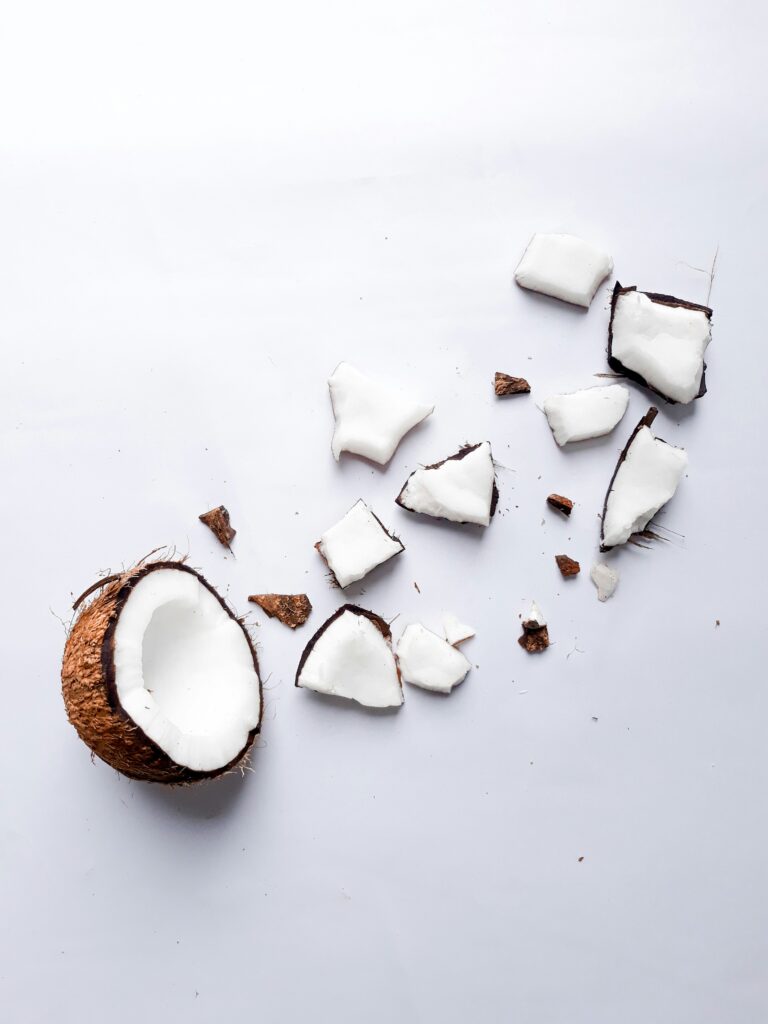
You do not just grab a random coconut from the grocery store and throw it at a wall. The process is intentional. First, you select a fully mature, brown coconut without any cracks or soft spots. The younger green ones are just for drinking. Before breaking it, the shell is usually washed and marked with a dot of kumkum to invoke divine feminine energy. The person holds it, often reciting a quick mantra to Lord Ganesha, the remover of obstacles. Then, it is broken. It can be struck against a stone, thrown hard onto the ground at a business opening, or cracked open by hand by an experienced priest. Afterwards, the flesh is shared with everyone in the room as prasad. The water is sometimes sprinkled to bless the location, and the husk is respectfully disposed of.
Reading the Break
People naturally look at the broken pieces for clues about the future.
- A clean break in half with flowing water: Very auspicious. The beginning is blessed.
- A partial or jagged break: The work will succeed, but you will have to put in some serious effort.
- It bounces or refuses to break: A sign of potential obstacles. It is a quiet suggestion to double-check your plans.
- Spoiled or dry inside: This is inauspicious, but it just means you picked a bad fruit. Grab a fresh one and try again.
What Astrology Says About Breaking a Coconut
If you follow Vedic astrology, the coconut ritual aligns beautifully with the planets. Because Ganesha is the presiding energy, the ritual is heavily tied to the planet Ketu. The sharp sound of the break belongs to Mercury, the planet of communication and openings.
The palm tree itself is ruled by Venus, connecting it to prosperity and Lakshmi. If you are planning to start something new, Wednesdays, Thursdays, Fridays, and Sundays are the best days. Try to avoid Tuesdays and Saturdays for major new beginnings.
Also, keep the current sky in mind. From June 29 to July 24, 2026, Mercury is retrograde. This is a great time to break a coconut to recommit to an old project, but terrible for starting a brand-new one. Furthermore, the Chaturmas period begins around July 26, a time when major life beginnings are traditionally paused anyway.
The Universal Takeaway
You might be wondering about the waste. In a traditional setting, absolutely nothing is wasted. The flesh is eaten, the water is consumed, and the shell is repurposed. Throwing a cracked coconut directly into the trash is a modern bad habit. If you do this ritual, share the food, give the scraps to animals, and bury the shell.
The core teaching is incredibly simple: every important beginning deserves to be marked. Modern life moves too fast. We start new jobs, sign massive contracts, and move into new homes while distracted, scrolling on our phones, and rushing to the next task.
We treat beginnings like administrative paperwork. The coconut reminds us that beginnings are actually karmic seeds.
Wondering if now is the right time to begin something important?
Ask Agastyaa on AstroSure. Get 4 free questions.
Breaking a Coconut FAQs
1. Why do people break a coconut before starting something new?
In Vedic tradition, breaking a coconut symbolises surrendering the ego and beginning an important task with humility, gratitude, and a clear mind.
2. Is breaking a coconut considered good luck?
It is generally regarded as an auspicious ritual. Rather than bringing luck by itself, it represents seeking blessings and starting a new journey with positive intentions.
3. Why is a coconut offered to Lord Ganesha?
Lord Ganesha is worshipped as the remover of obstacles. Offering and breaking a coconut before praying to Ganesha symbolises clearing inner and outer obstacles before a new beginning.
4. Does it matter how the coconut breaks?
Many traditions believe a clean break is a positive sign, while an uneven break suggests that extra effort or patience may be needed. These interpretations are symbolic rather than fixed predictions.
5. Can you break a coconut at home before an important event?
Yes. Many families perform this ritual before moving into a new home, buying a vehicle, starting a business, or beginning another important chapter in life.
6. What should you do with the coconut after the ritual?
Traditionally, the coconut is not wasted. The water and flesh are shared as prasad, while the shell is disposed of respectfully or repurposed where possible.
Want personalised cosmic guidance?
Download AstroSure and chat with Agastyaa AI for insights tailored to your birth chart.
Download AstroSure