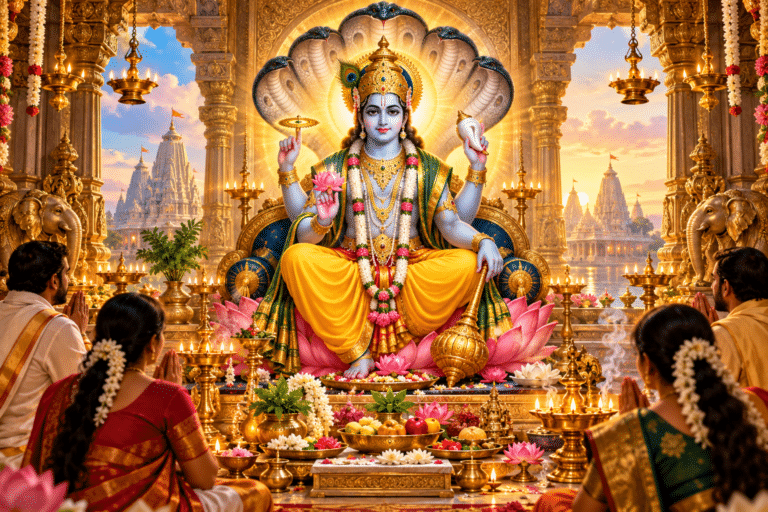
Gudi Padwa 2026: Date, Muhurat and Significance (Simple Guide)
Have you ever wondered why we celebrate New Year’s Day in the middle of winter, when everything outside is cold and dormant? It is a bit strange when you think about it, isn’t it? The logic of the Gregorian calendar says January 1 is the start. But if you look at nature, the real new beginning happens when the trees start sprouting fresh leaves and the air turns warm. This brings us to Gudi Padwa, the Marathi New Year. Gudi Padwa is a festival that is based on the change in nature. If you have ever been curious about those bright flags popping up on balconies in Mumbai or Pune, or why everyone suddenly starts eating neem leaves, let us walk you through it.
When Is Gudi Padwa in 2026?
You might be thinking that since the date changes every year, when exactly do we celebrate this time? The date for the festival is based on the lunisolar calendar, specifically on a day called Chaitra Shukla Pratipada.
- For 2026, Gudi Padwa falls on Thursday, March 19.
- Pratipada Tithi Begins: 06:52 AM on March 19
- Pratipada Tithi Ends: 04:52 AM on March 20
Also read: Indian New Year Festivals Guide
What Does Gudi Padwa Actually Mean?
Have you ever looked at the name and wondered what it stands for? It is actually quite literal. Gudi means the victory flag or banner and Padwa refers to the first day of the lunar phase. So, when you say Gudi Padwa, it literally translates to ‘The Flag of the First Day.’ But why a flag? Legend has it that this flag symbolises victory. Some say it represents Lord Rama’s return to Ayodhya after defeating Ravana. Others believe it celebrates the victory of King Shalivahana over the Sakas. Either way, hoisting it is you telling the universe that you are ready to win this year.
Gudi Padwa Rituals: How the Marathi New Year is Celebrated
If you walk into a Marathi household on the morning of Gudi Padwa 2026, what would you see? It is a fascinating mix of cleaning, decorating, and very specific timing.
- The Early Morning Start: The day starts before the sun comes up.
- The Oil Bath: This is not your regular shower. It is a ritual oil bath (Abhyang Snan) meant to purify the body and rejuvenate the skin.
- New Clothes: Everyone dresses up. It is about shedding the old energy and stepping into the new year looking your best.
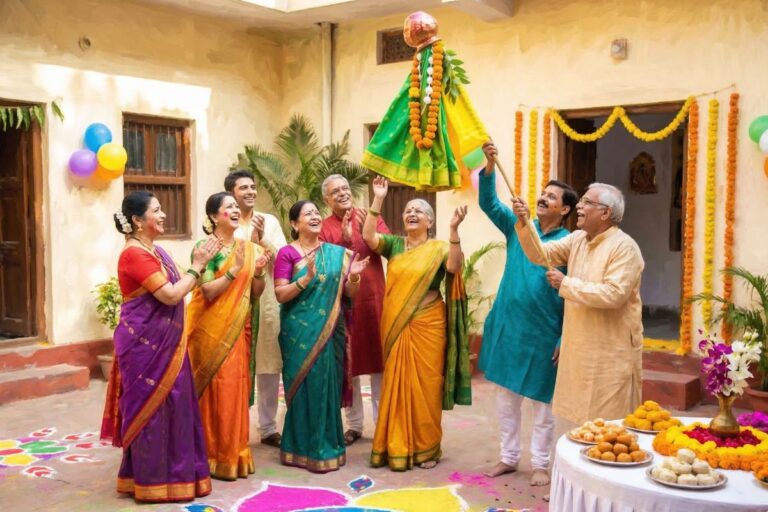
- Hoisting the Gudi: This is the main event. You will see families hoisting the Gudi arrangement high up on a window or terrace. Every part has a meaning:
The Bamboo Stands for strength and spine.
The Saree/Cloth, usually silk, represents luxury and comfort.
The Neem & Mango Leaves are for health and well-being.
The Inverted Pot is a copper or silver kalash placed upside down and is believed to capture cosmic energy.
Auspicious timings for Gudi Padwa 2026
- Morning (Shubha): 06:14 am – 07:45 am
- Afternoon (Labha): 12:17 pm – 01:47 pm
- Afternoon (Amrita): 01:47 pm – 03:18 pm
- Evening (Shubha): 04:49 pm– 06:20 pm
- Night (Amrita): 06:20 pm – 07:49 pm
The Taste of Life: Why Eat Neem?
Here is something that might confuse you at first. On a festival day, you’d expect the first thing you eat to be sweet, right? But on Gudi Padwa, the first ritual food is often a paste made of Neem leaves and Jaggery. There is a beautiful philosophy behind this. The bitterness of the neem represents the sad or difficult moments of life, while the jaggery represents the happy, sweet moments. By eating them mixed together, you are accepting that the new year will have both and affirming that you are ready to handle it all.
Is It the Same as Ugadi?
You might wonder, ‘Wait, isn’t there another festival called Ugadi on the same day?’ Yes! You are absolutely right. In Maharashtra, it’s Gudi Padwa. In Andhra Pradesh and Karnataka, it’s Ugadi. They are the exact same festival, celebrating the same astronomical event (the start of the lunisolar year), just with different names and slightly different local traditions. It’s a great reminder of how connected these cultures are.
What’s on the Menu?
After the bitter neem ritual, the food gets much better (don’t worry!). If you are lucky enough to be invited for lunch, here is what you might find:
- Puran Poli: A sweet flatbread stuffed with lentils and jaggery. It is warm, comforting, and absolutely delicious.
- Shrikhand: A thick, sweetened yoghurt dessert often flavoured with saffron and cardamom.
- Poori: Fried bread that goes perfectly with the Shrikhand.
Also read: Cheti Chand 2026: Sindhi New Year Date and Rituals
Gudi Padwa offers a different kind of reset. One that is softer and tied to the seasons. It asks you to clean your home, hoist a flag of victory, accept the bitter with the sweet, and eat a good meal with your family. So, on March 19, 2026, even if you don’t hoist a Gudi yourself, maybe take a moment to look at the trees and you will see the new leaves, feel the change in the air and you will know that the world is starting fresh, and you can too. Isn’t that a nice way to look at a New Year?
Ask Agastyaa what Gudi Padwa’s energy means for your year based on your birth chart
Want personalised cosmic guidance?
Download AstroSure and chat with Agastyaa AI for insights tailored to your birth chart.
Download AstroSure