Why Is Lemon and Chilli Hung Outside Shops and Homes?
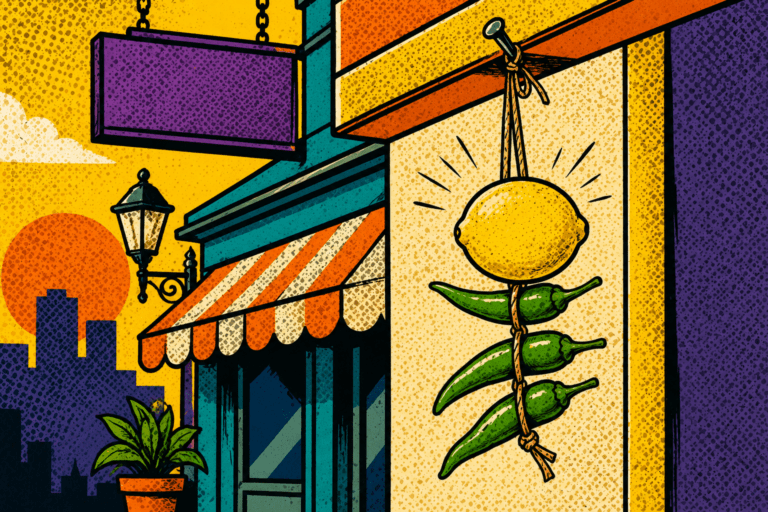
Walk through any bazaar in Delhi, drive behind a truck on a highway near Chennai, or step into a brand-new office in Mumbai. You will see it everywhere. Hanging right above the doorway or dangling from the bumper is a simple cotton string. It holds one lemon and chilli combination. The nimbu-mirchi is arguably the most recognisable protection charm in India. Almost everyone knows it is meant to ward off buri nazar (the evil eye). However, surprisingly few people know why we use these exact ingredients. Why a lemon? Why exactly seven chillies? Furthermore, why do shopkeepers change it every single Saturday? The truth is, this Indian evil eye charm is incredibly profound. It is one of the most philosophically brilliant systems ever designed. Indeed, the logic behind it is actually fascinating.
Key Takeaways
- The lemon and chilli ritual is not just about warding off the evil eye. It reflects an old belief that every new beginning deserves protection.
- Each part of the nimbu-mirchi has a specific purpose. The lemon absorbs negative energy. Meanwhile, the chillies symbolically keep it away.
- Many cultures use protective symbols at the entrance of homes and businesses. This shows that the concept goes far beyond India.
- Whether you see it as a spiritual ritual or a mindful tradition, it helps. It reminds us to begin each week with intention and positivity.
What Exactly Are We Warding Off?
Before we look at the meaning of nimbu-mirchi, we have to understand the threat. What is it actually protecting you from? In Vedic astrology principles, nazar is the energetic residue of another person’s intense attention. But here is the catch. Nazar does not require malicious intent. Someone can genuinely admire your new car, your beautiful baby, or your business. Unfortunately, their attention can still leave a heavy energetic mark. This energy naturally attaches to things that stand out.
When too much of this attention accumulates, it manifests as small misfortunes. A running car suddenly breaks down. A healthy baby gets a fever. Alternatively, a busy shop hits a slump. You cannot stop people from looking at your success. Therefore, our ancestors created a system. It absorbs the energy before it actually crosses your threshold.
Why Lemon and Chilli?
The nimbu-mirchi is actually a highly sophisticated security system. It operates in two specific parts.
- The Lemon (The Absorber): In Ayurveda, sour things are associated with cleansing and removing toxins. Energetically, the lemon acts as a sponge. It sits at the doorway and quietly absorbs the negative energy coming your way. Over the course of the week, it ‘consumes’ this heavy energy. Consequently, the lemon visibly dries up and turns dark.
- The Green Chillies (The Repellent): While the lemon absorbs, the chillies repel. Chillies are spicy and highly pungent. They are believed to cut through obstacles and remove stagnant energy. You specifically use seven chillies to represent the seven classical planets in Vedic astrology. This ensures you have a complete, planetary shield for the seven days of the week.
Together, the lemon and chilli become a perfect team. One ingredient absorbs the hit, and the other pushes back the negativity.
Also Read: Is Breaking Glass Good Luck or Bad Luck? The Superstition Explained
The Deepest Secret: Feeding Alakshmi
There is a deeper, almost entirely forgotten reason for using this charm. It has to do with the goddess of wealth. In Vedic philosophy, Lakshmi (the goddess of wealth and prosperity) has an elder sister named Alakshmi. She is the goddess of misfortune, poverty, and quarrels. The classical texts say that both sisters exist in the world. You cannot simply banish Alakshmi entirely. However, Alakshmi has very specific tastes. While Lakshmi loves sweets and clean, beautiful spaces, Alakshmi strongly prefers sour, pungent, and bitter foods. By hanging a lemon and chillies at your front door, you are making an offering. You are essentially offering Alakshmi her favourite meal outside your home. The logic is brilliant. You feed the goddess of misfortune at the threshold. As a result, she is satisfied and has absolutely no reason to step inside. You give her exactly what she wants, right at the boundary.
How to Use Lemon and Chilli the Traditional Way
Because you are literally absorbing negative energy and feeding misfortune, you must be careful. The nimbu-mirchi has to be handled with specific rules.
- Always use a fresh lemon and seven fresh green chillies. They are strung together on a thick black thread. Black is traditionally known to absorb negative vibrations.
- The ward should be hung and replaced on Saturdays. Saturday is ruled by Saturn, the planet of obstacles, boundaries, and Alakshmi’s domain. Tuesday, ruled by fierce Mars, is the second-best option.
- When Saturday rolls around, you never just toss the old string into your kitchen trash bin. It has spent a week absorbing heavy energy. Traditionally, it is thrown at a crossroads where energies dissipate, or it is burned. In a modern city, you should at least wrap it in paper and dispose of it outside your home.
Why So Many Cultures Have Protection Rituals
You will find this same logic all over the world. In the Middle East, they hang the blue nazar bead at doorways. In Mediterranean homes, you will see garlic strings or horseshoes. The Chinese use Bagua mirrors. Cultures across the globe all came to the same conclusion. The boundary between the inside and the outside is energetically heavy. Therefore, it needs to be guarded. The shopkeeper who climbs a stool every Saturday morning is not just practising a silly superstition. They are practising an ancient ritual.
The tradition does not pretend that jealousy or misfortune do not exist. It does not ask you to live in paranoia. Instead, it offers a five-minute weekly ritual. It essentially says: I know not everyone wishes me well. I acknowledge that misfortune exists. I am leaving an offering for it at the door.
Now, I am going to go inside and run my business. That is not just a superstition. Indeed, that is a mature way to handle the weight of the world while continuing to build your own success.
Want to know which rituals suit your birth chart?
Ask Agastyaa on AstroSure. Get 4 free questions.
Nimbu Mirchi FAQs
1. Why are seven chillies used instead of any other number?
In Vedic tradition, the number seven is associated with the seven classical planets. Using seven chillies symbolically creates a complete layer of protection for the week ahead.
2. Why is the lemon and chilli changed every Saturday?
Saturday is ruled by Saturn, the planet associated with karma, obstacles, and boundaries. Many people replace the nimbu-mirchi on this day as part of a weekly cleansing ritual.
3. Can you hang a lemon and chilli at home as well as at a shop?
Yes. The ritual is commonly used at homes, offices, factories, vehicles, and businesses to symbolically protect new beginnings and important spaces.
4. Does the lemon and chilli really remove the evil eye?
Traditional belief says it helps absorb and deflect negative energy. Whether someone sees it as a spiritual practice or a cultural ritual depends on their personal beliefs.
5. What should you do with the old lemon and chilli?
Traditionally, it should be disposed of respectfully outside the home rather than thrown into household waste, as it is believed to have absorbed unwanted energy.
Want personalised cosmic guidance?
Download AstroSure and chat with Agastyaa AI for insights tailored to your birth chart.
Download AstroSure